

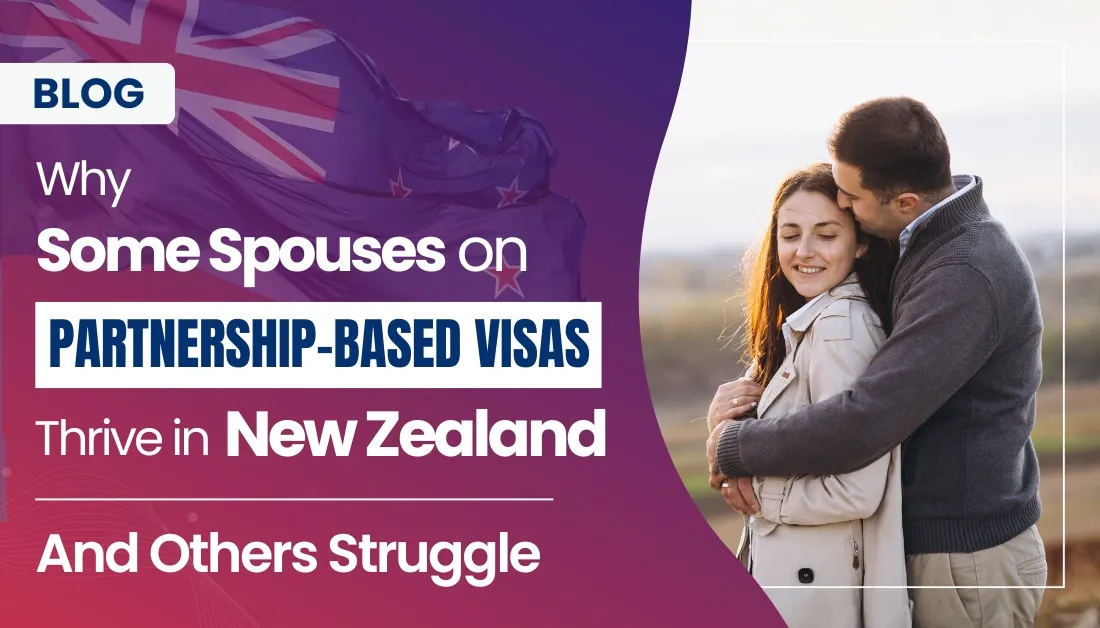
Why Some Spouses on Partnership-Based Visas Thrive in New Zealand – And Others Struggle
Every year, thousands of couples arrive in New Zealand with a shared plan:
One partner studies or works.
The other supports, works, and builds a life alongside.
On paper, it’s a solid strategy.
In reality, outcomes vary dramatically.
Some spouses settle quickly, secure jobs, and contribute to a stable household.
Others struggle for months — sometimes years — despite holding valid work rights.
So what creates this difference?
It’s Not the Visa – It’s the Positioning
Most people assume success depends on the visa.
It doesn’t.
Two individuals can hold the same partnership-based visa and experience completely different outcomes.
The real difference lies in how well they are positioned for the New Zealand job market.
The Spouses Who Thrive
Spouses who do well in New Zealand usually arrive with clarity and alignment.
They tend to have:
- Skills that match New Zealand’s labour demand
- Work experience that is relevant and transferable
- A clear understanding of what roles they can realistically secure
- The ability to adapt quickly to local workplace expectations
Most importantly:
They don’t wait for opportunities — they position themselves for them.
The Spouses Who Struggle
On the other hand, many spouses arrive with expectations that don’t match reality.
Common challenges include:
- Qualifications that are not aligned with in-demand roles
- Work experience that is difficult to translate locally
- Lack of understanding of how the NZ job market operates
- Over-reliance on the assumption that “any job will work”
And perhaps the biggest issue:
Treating the partnership visa as a guarantee — instead of an opportunity.
The Hidden Dependency
A partnership-based visa may grant work rights.
But it does not guarantee:
- Employment
- Skilled job outcomes
- Progress toward residence
In many cases, the spouse’s journey becomes indirectly dependent on:
- The primary applicant’s job stability
- Household financial pressure
- Time available to upskill or transition
Which means:
Even with work rights, the pathway can stall without the right strategy.
The Gap Between Expectation and Market Reality
Many couples plan migration around a simple assumption:
“Once we reach New Zealand, things will fall into place.”
But the New Zealand labour market is structured, selective, and experience-driven.
Employers look for:
- Local relevance
- Industry-specific skills
- Confidence in communication
- Ability to contribute from day one
Without this alignment, even capable professionals struggle to break through.
What Makes the Difference
The spouses who succeed usually have one thing in common:
They treat their journey as a career transition — not just a relocation.
This means:
- Understanding which roles are actually accessible
- Being willing to start strategically, not ideally
- Adapting quickly to New Zealand standards and expectations
The Role of Planning (Before Arrival)
The biggest advantage is not what you do after arriving.
It’s what you plan before arriving.
Successful cases often involve:
- Selecting pathways that align with in-demand occupations
- Understanding whether the spouse can realistically enter the workforce
- Preparing for:
- CV adaptation
- Job search strategies
- Industry expectations
Final Thought
A partnership-based visa opens the door.
But it does not define the outcome.
Some spouses thrive because they are aligned with the system.
Others struggle because they rely on assumptions.
New Zealand still offers strong opportunities.
But success now depends on:
- Alignment
- Adaptability
- And a clear understanding of how the system actually works
Need Clarity on Your Spouse Visa Strategy?
If you’re planning your move to New Zealand and want to ensure your spouse pathway is aligned with real job outcomes and residence options, it’s important to get the right advice early.
Connect with Immigration Advisers New Zealand Ltd (IANZ) for a structured and compliant assessment. Email: contact@nzimmigration.info Phone: +64 9 3790219


Author Details



 Home
Home
 Services

 Contact
 About
About