
Provide All Relevant Information - Submit Query

Student Visa

Profile Check Form

Click Here ×
S
t
u
d
e
n
t

V
i
s
a

Get in Touch

    Skilled Migrant Category (SMC) Changes 2026: What Migrants Need to Know

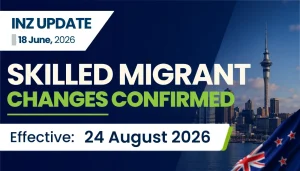
    Immigration New Zealand has released further details about upcoming changes to the Skilled Migrant Category (SMC) that will take effect from late August 2026.

    The Skilled Migrant Category Resident Visa is New Zealand’s primary pathway to residence for skilled workers. The upcoming SMC changes in 2026 are designed to simplify settings, better target genuine skills shortages, and support long-term economic growth.

    These changes build on reforms first announced in September 2025 aimed at helping New Zealand employers attract and retain skilled workers.

    Key Skilled Migrant Category Changes Coming in August 2026

    The latest Immigration New Zealand announcement confirms several important policy updates.

    Key SMC visa changes for 2026 include:

    • Confirmation of the Trades and Technician residence pathway occupation list
    • Introduction of Red and Amber occupation lists
    • Simplified median wage settings across SMC pathways
    • Updated qualification point requirements
    • Extended English language test validity
    • Recognition of a new occupational registration pathway for accountants
    • A future option to extend Accredited Employer Work Visas (AEWV) to complete skilled work experience requirements

    Trades and Technician Residence Pathway Confirmed

    One of the most significant SMC changes in 2026 is the confirmation of the Trades and Technician residence pathway.

    This pathway is designed for migrants working in skilled trades and technical occupations that are important to New Zealand’s labour market.

    To qualify, applicants must:

    • Work in ANZSCO Skill Level 1–3 trades or technician occupations
    • Hold a relevant Level 4 or higher qualification
    • Have at least four years of relevant work experience after qualification
    • Have completed at least 1.5 years of skilled work experience in New Zealand earning the SMC median wage

    The policy recognises that many highly skilled tradespeople previously had limited realistic pathways to residence under the existing SMC framework.

    New Red and Amber Occupation Lists

    Another key feature of the 2026 Skilled Migrant Category changes is the introduction of Red and Amber occupation lists.

    These lists help Immigration New Zealand manage immigration risk and ensure that residence pathways remain targeted to genuine labour shortages.

    Red List Occupations

    Applicants working in occupations on the Red List will not be eligible for the new SMC residence pathways.

    Instead, they must qualify under the existing 6-point Skilled Migrant Category framework, which may require:

    • Earning 1.5 times the SMC median wage, or
    • Holding a Bachelor’s degree or higher, or
    • Having recognised occupational registration

    Examples of occupations on the Red List include:

    • Retail Manager
    • Hairdresser
    • Beauty Therapist
    • Massage Therapist
    • Hospitality/Retail/Service Manager (NEC)

    Amber List Occupations

    Applicants in Amber List occupations may qualify under the Skilled Work Experience pathway, but must meet additional criteria.

    Requirements include:

    • At least five years of relevant work experience in New Zealand
    • Two years of skilled work experience earning at least 1.2 times the SMC median wage

    Examples of Amber List occupations include:

    • Hotel or Motel Manager
    • Café or Restaurant Manager
    • Baker
    • Chef
    • Office Manager
    • ICT Support Technician
    • Web Administrator

    Immigration New Zealand has indicated that the Red and Amber lists will be reviewed regularly to ensure they remain aligned with labour market needs.

    Wage Changes Under the Skilled Migrant Category

    The SMC changes in 2026 also simplify wage settings.

    Two important changes include:

    Median Wage Locked at Start of Employment

    Applicants will only need to meet the SMC median wage that applied when they began skilled employment, rather than meeting any higher threshold later if wages increase.

    Grace Period for Wage Increases

    If the median wage increases before a migrant begins work, a five-month grace period will apply.

    If employment begins within five months of the visa being granted, the wage threshold in place when the visa was issued will still apply.

    Changes to Qualification Points

    Further clarification has been provided about how qualification points will be assessed under the SMC changes in August 2026.

    Key updates include:

    • New Zealand qualifications will receive one additional point compared with overseas qualifications
    • Applicants must provide a qualification certificate and an International Qualification Assessment (IQA) for overseas qualifications unless exempt.

    Additional rules include:

    • Applicants claiming points for Level 8 or Level 9 qualifications must also hold a Bachelor’s degree, except in certain cases.
    • Applicants claiming 6 points for a New Zealand Master’s degree must have studied full-time in New Zealand for at least 30 weeks.

    English Language Test Validity Extended

    Under the 2026 SMC policy changes, English language test results will be valid for five years for applicants who hold recognised occupational registration.

    This change provides additional flexibility for professionals who require registration before qualifying for residence.

    New Occupational Registration for Accountants

    From August 2026, accountants who hold membership with CPA Australia and are able to undertake the work of a Qualified Statutory Accountant in New Zealand will be eligible for residence under the Skilled Migrant Category.

    Future Ability to Extend Accredited Employer Work Visas

    Another policy change expected in 2027 will allow some migrants to extend their Accredited Employer Work Visa (AEWV).

    This extension will help migrants who require up to 12 additional months of skilled work experience to meet Skilled Migrant Category residence requirements.

    Further details about eligibility and application processes will be released closer to implementation.

    What the SMC Changes in 2026 Mean for Migrants

    The Skilled Migrant Category changes coming in August 2026 reinforce several key trends in New Zealand immigration policy:

    • Greater emphasis on skilled employment in New Zealand
    • Clearer pathways for trades and technical occupations
    • Stronger focus on relevant qualifications and professional registration
    • Simplified rules around wage thresholds and work experience

    For migrants planning to live and work in New Zealand long-term, understanding these changes is essential when planning a pathway to residence.

    Immigration Advice for Skilled Migrants

    Immigration policy can change frequently, and each applicant’s situation is different.

    Understanding how SMC points, wage requirements, work experience, and occupation lists interact is critical when planning a residence strategy.

    If you are considering applying for residence under the Skilled Migrant Category in 2026, professional immigration advice can help ensure your pathway aligns with current policy.

    Median Wage Increasing to NZ$35 – What It Means for Migrants and Employers

    From 9 March 2026, New Zealand’s immigration median wage will increase to NZ$35.00 per hour, up from NZ$33.56.

    While employers under the Accredited Employer Work Visa (AEWV) currently pay the market rate rather than the median wage, this change is still significant. That is because several immigration settings remain tied to the median wage — and when it rises, eligibility thresholds rise with it.

    This is not just a technical update. It directly affects migration planning.

    Why the Median Wage Still Matters

    Although AEWV job offers are based on market rate, the median wage continues to influence:

    • Eligibility for certain visa categories
    • Income thresholds required for skilled residence pathways
    • Work experience recognition for Skilled Migrant Category
    • Eligibility to support or bring family members
    • Maximum visa duration in some cases
    • Job Check advertising requirements

    In short, even if your employer is paying market rate, the median wage can determine what your next step looks like.

    What Migrant Workers Should Know

    The key rule is this:
    Employers must pay the wage threshold that applies at the time you start working on your visa.

    They are not required to automatically increase wages for existing workers unless:

    • The worker applies for a new visa, or
    • The visa conditions change.

    However, if you are planning to apply for residence, sponsor family, or transition to a different visa category, your income will be assessed against the new NZ$35 threshold from 9th March 2026.

    This makes timing critical.

    Planning Implications

    For migrants:

    • Review whether your current income will meet future residence thresholds.
    • Assess whether your role aligns with Skilled Migrant Category or Green List pathways.
    • Consider whether applying before or after 9th March 2026 impacts eligibility.

    For employers:

    • Be aware that while market rate applies under AEWV, median-linked thresholds continue to shape residence and family pathways.
    • Future recruitment planning may need to factor in the updated median benchmark.

    Parent Category Updates

    Sponsorship income thresholds for the Parent Category and Parent Boost Visitor Visa will be updated later in 2026. Separate guidance is expected for these changes.

    Final Thought

    The median wage increase may appear small numerically, but it affects multiple immigration settings. Migration strategy should not be reactive — it should be reviewed before policy changes take effect.

    If you are relying on wage-based thresholds for residence or family sponsorship, now is the time to reassess your position.

    47 New Roles Added to the National Occupation List – What It Means for AEWV Applicants

    From 9 March 2026, 47 new roles will be recognised at Skill Levels 1 to 3 for Accredited Employer Work Visa (AEWV) applications. At the same time, three occupations will be reclassified from Skill Level 3 to Skill Level 4.

    These updates reflect New Zealand’s transition to the National Occupation List (NOL) — a new job classification system that is gradually replacing ANZSCO (Australia and New Zealand Standard Classification of Occupations).

    This change is more than administrative. Skill level directly affects visa conditions.

    Why Skill Level Matters

    Under the AEWV framework, the skill level of a role determines:

    • Employer advertising requirements
    • Whether engagement with Work and Income is required
    • English language requirements for migrants
    • Visa duration
    • Eligibility to support dependent family members

    In general, higher-skilled roles (Levels 1–3) face fewer restrictions and offer more favourable conditions.
    Lower-skilled roles (Level 4 and 5) carry stricter rules.

    Roles Reclassified to Skill Level 4

    The following three occupations will move from Skill Level 3 to Skill Level 4 from 9 March 2026:

    • Pet Groomer
    • Nanny
    • Kennel Hand

    This reclassification means stricter compliance requirements will apply to these roles.

    What Employers Need to Know

    For the three reclassified roles:

    • Job Check applications submitted on or after 9 March 2026 must meet Skill Level 4 requirements.
    • This includes longer advertising periods and engagement with Work and Income.

    However:

    • Job Check applications submitted before 9 March 2026 will be assessed under Skill Level 3 requirements.
    • Any AEWV application will be assessed according to the skill level that the Job Check was approved under.

    Timing, therefore, becomes critical.

    Transition to the National Occupation List

    New Zealand is gradually moving from ANZSCO to the NOL. For now:

    • Both classification systems are being used.
    • NOL roles are currently recognised for AEWV purposes only.
    • They are not yet recognised for Skilled Residence pathways.

    Further updates are expected as the transition progresses.

    Strategic Considerations

    For employers:

    • Review role classifications before submitting new Job Checks.
    • Understand how changes in skill level may affect advertising and compliance obligations.

    For migrant workers:

    • Be aware that skill classification impacts visa conditions and family eligibility.
    • If your role is affected by reclassification, timing of application may matter significantly.

    Immigration settings are increasingly classification-driven. Understanding how your occupation is coded under the new system is no longer optional — it directly impacts visa eligibility and long-term planning.

    Further updates will follow as the transition to the National Occupation List continues.

    INZ Update — Job Check Applications (go-live 29 September 2025)

    What’s changing

    From Monday, 29 September 2025, INZ will release a redesigned online Job Check form and refreshed immigration requirements. The new experience is clearer, more intuitive, and reduces back-and-forth.

    Why is INZ changing it

    The redesign is based on feedback from employers, licensed advisers, regular users, and INZ staff. Their input shaped a more practical, user-friendly process.

    Key improvements

    • Clearer guidance throughout the form so users know exactly what to include.
    • Built-in completeness checks to prevent missing information at submission.
    • Streamlined sections aligned to updated immigration settings.

    These changes are intended to reduce processing delays and support faster decisions where requirements are met.

    Applicants must submit everything INZ needs — upfront

    The updated form asks for some information earlier in the process. Please include:

    • Why the role is needed (business rationale/workload drivers).
    • Business size (e.g., headcount; for large organisations an approximation is acceptable).
    • How many New Zealanders are currently employed?

    Providing this context upfront helps ensure applications are complete, minimises follow-ups, and gives processing staff a clear understanding of the business and the role—leading to more efficient, informed assessments.

    Tip for smoother lodgements

    Have ready: a short business case, org chart, headcount/payroll summary, and any pipeline or operational evidence supporting the role.

    INZ Update: New Seasonal Visa Pathways to Support Employers During Peak Periods

    The New Zealand Government has announced two new seasonal visa pathways, set to launch in December 2025, to help accredited employers access workers during periods of peak seasonal activity. These initiatives aim to address workforce shortages in industries that rely heavily on seasonal labour while maintaining robust visa conditions and checks.

    1. Global Workforce Seasonal Visa

    The Global Workforce Seasonal Visa is a 3-year visa designed for highly skilled seasonal workers in select industries, including:

    • Rural contracting
    • Sheep scanning
    • Shearing
    • Winemaking
    • Ski instruction

    Key requirements:

    • Applicants must demonstrate three seasons of relevant work experience.
    • A valid job offer in an eligible role is required.
    • Applicants must meet standard health and character requirements.
    • Visa holders must spend at least three months outside New Zealand each year.

    Employer conditions:

    • Accredited employers can recruit workers under this visa without completing a standard labour market test (such as advertising roles).

    2. Peak Seasonal Visa

    The Peak Seasonal Visa offers short-term flexibility for employers needing additional labour during peak times. It allows visa holders to work in New Zealand for up to seven months in eligible roles, such as:

    • Meat and seafood processing
    • Calf rearing
    • Wool handling

    Key requirements:

    • Applicants must have at least one season of relevant work experience.
    • A job offer in an eligible role is required.
    • Comprehensive health insurance is mandatory if the stay exceeds three months.
    • After seven months in New Zealand, visa holders must spend four months outside the country before applying again.

    Employer conditions:

    • Employers must be accredited and hold an approved Job Check.
    • A labour market test or formal endorsement from Work and Income is required.
    • INZ will assess each Job Check to confirm the role is genuinely seasonal.

    What This Means for Employers and Workers

    These new visa pathways provide much-needed certainty for industries such as agriculture, food processing, viticulture, and tourism, which rely heavily on seasonal labour. For workers, the visas create clear opportunities to gain valuable experience in New Zealand while supporting sectors critical to the economy.

    Next Steps

    Further details about application processes, eligible roles, and specific conditions will be released in the coming months.

    Stay updated by subscribing to our newsletter or emailing us at contact@nzimmigration.info for the latest announcements and eligibility criteria.

    New Zealand Student Visa Work Hours Increased to 25 Hours/Week – What You Need to Know

    Government Launches International Education Going for Growth Plan

    On Monday, 14 July 2025, the New Zealand Government officially announced the International Education Going for Growth Plan, a bold step aimed at:

    • Supporting sustainable economic growth
    • Attracting more international students
    • Maintaining high education standards
    • Managing immigration risks responsibly

    As part of this plan, Immigration New Zealand (INZ) is making important changes to student visa conditions, effective from 3 November 2025.

    Increased In-Study Work Hours

    Starting 3 November 2025, eligible tertiary and senior secondary (Years 12–13) international students will be allowed to work up to 25 hours per week during the academic semester—up from the current 20-hour limit.

    This new rule will apply to:

    • All new student visas granted on or after 3 November 2025
    • Applications already submitted but granted after this date

    Already on a 20-hour visa?

    You’ll need to apply for a variation of conditions or new visa to benefit from the 25-hour policy. Standard INZ application fees will apply.

    • Summer breaks and holidays: Most student visas already allow full-time work during breaks. If that applies to you, you may choose to delay applying for the extra 5 hours until after your break.
    • Secondary school students (Years 12 and 13): You’ll still need written permission from both your school and parents to work up to 25 hours a week.

    Work Rights Extended to Exchange Students

    INZ will also extend in-study work rights to:

    • All tertiary-level exchange and Study Abroad students
    • Including those enrolled in short-term (1 semester) programmes

    This change ensures greater equity for all types of international learners and offers more opportunities for cultural and professional integration.

    New Visa Required for Changes in Study Path

    If you:

    • Switch to a new education provider, or
    • Move to a lower level of study

    You must apply for a new student visa rather than requesting a simple variation. This ensures better tracking and integrity within the student visa system.

    Current Stats & Outlook

    As of July 2025:

    • 40,987 student visa holders currently have in-study work rights
      • 29,790 visas expire on or before 31 March 2026
      • 11,197 visas will expire after that date

    Not all visa holders are expected to seek the 5-hour upgrade. Some may wait to include it in their next visa application, while others near graduation may opt out.

    What’s Next?

    Subject to Cabinet approval, INZ is also exploring:

    • A new short-term work visa (up to 6 months) for some vocational graduates
    • Streamlined visa processing, including multi-year visas and improved graduate-to-work pathways

    Stay tuned—more updates will be released as they are confirmed.

    Final Thoughts

    These policy changes reflect New Zealand’s commitment to supporting international students and enhancing its global education reputation. With more work hours, greater inclusivity, and clearer visa protocols, students will enjoy improved opportunities to earn, learn, and thrive in Aotearoa.

    Reach out to Immigration Advisers New Zealand Ltd on contact@nzimmigration.info for expert advice tailored to your situation.

    INZ Update: Wage Threshold Changes for Accredited Employer Work Visa (AEWV)

    Immigration New Zealand (INZ) has announced updates to wage thresholds for the Accredited Employer Work Visa (AEWV), effective 18 August 2025. These changes reflect the June 2024 median wage of $33.56 per hour and are part of INZ’s commitment to maintaining a fair, consistent, and responsive immigration system.

    Key Updates:

    • Twice the median wage ($67.12/hour or more): Workers may be exempt from the labor market test and minimum skills threshold.
    • 1.5 times the median wage ($50.34/hour or more): Workers may qualify for a maximum continuous stay of 5 years on an AEWV.

    The updated thresholds ensure visa settings remain aligned with New Zealand’s job market, helping to protect local wages while supporting employers in accessing the skilled workers they need.

    These changes are designed to strike a balance between protecting local wages and providing employers with the ability to fill critical skill shortages. By aligning visa criteria with the latest median wage, INZ is ensuring the system remains fair and responsive to the needs of both migrant workers and NZ employers.

    The Accredited Employer Work Visa is a key pathway for skilled workers to contribute to New Zealand’s economy, and these updates reflect INZ’s ongoing efforts to support a thriving labour market.

    For more details, visit here.

    Government Strengthens Immigration System with New Amendment Bill

    The Government is taking proactive steps to secure the fiscal sustainability and integrity of the immigration system, marked by the successful first reading of the Immigration (Fiscal Sustainability and System Integrity) Amendment Bill.

    The steps are being taken as the New Zealand government feels that the immigration system needs to be smart, responsive, and flexible to keep pace with the changing geopolitical context. The changes proposed will help ensure immigration settings appropriately respond to risk and are sustainable.

    This Bill introduces key enhancements to maintain a balanced, efficient, and fair immigration system. These include:

    • Safeguarding vulnerable individuals, including refugees and protection claimants, following recommendations from the 2022 Victoria Casey review.
    • Requiring judicial warrants for out-of-hours compliance activities, a measure from the 2023 Michael Heron review.
    • Improved prosecution of migrant exploitation and tougher consequences for residence class visa holders who commit criminal offenses.
    • Flexibility for unusual events such as natural disasters to ensure the system adapts effectively.
    • Updates to broaden the immigration levy payer base and consider options for a new immigration levy in the future, though these changes are not planned for this year.

    The changes are being put into place also to help futureproof the immigration system, and better balance the integrity of the immigration system with the rights of individuals.

    Explore the full details of the Immigration (Fiscal Sustainability and System Integrity) Amendment Bill here. Keep informed of further updates as these changes progress.

    New Zealand Simplifies Investor Visa Rules to Attract High-Value Migrants

    The recent announcement by Immigration New Zealand introduces key amendments to the Active Investor Plus Visa, effective 1 April 2025. These changes aim to modernize visa settings, streamline investment categories, and attract high-value foreign investors to bolster economic growth in New Zealand. Here’s a detailed analysis of the proposed updates and their implication.

    Key Changes:

    1. Introduction of Simplified Investment Categories

    Growth Category:

    • Focuses on higher-risk investments, including direct investments in New Zealand businesses.
    • Requires a minimum investment of NZD 5 million over a three-year period.

    Balanced Category:

    • Focuses on mixed investments with an emphasis on lower-risk options.
    • Under this category, acceptable investments include bonds and properties (new residential developments or new/existing commercial and industrial properties).
    • Requires a minimum investment of NZD 10 million over five years.

    2. Broadened Scope of Acceptable Investments

    • Investments for the Balanced category now include bonds and property (residential, commercial, or industrial developments).
    • This shift offers more flexibility to investors, appealing to those who prefer traditionally stable and lower-risk asset classes.

    3. Reduced Immigration Requirements

    • Removal of the English language requirement.
    • Reduced residency obligations for investors opting for active investments.

    4. Accelerated Investment Timeline

    • Both Growth and Balanced category investors are required to make all their investments within six months of receiving ‘approval in principle’ (with the possibility of a six-month extension).

    5. Focus on Active Investments

    • Incentivizing migrants to allocate funds in higher-risk active investment classes (e.g., direct business investment).
    • These investments position foreign investors to play an integral role in the country’s businesses and economy.

    6. Streamlined Visa Process

    Applicants will use the same online form, updated to reflect the new changes, creating a seamless application process

    Overall Goals of the Reforms

    The outlined changes primarily aim to:

    Attract Capital

    Targeting high-value investors through simplified entry pathways and broader investment categories.

    Boost Economic Growth

    The policy ensures both immediate and long-term economic stimulation, creating jobs and fostering innovation.

    Enhance Global Competitiveness

    These reforms address past criticisms by removing unnecessary barriers and emphasizing inclusivity and flexibility.

    Backed by Solid Rationale

    The reforms are informed by feedback from international investors and industry stakeholders. Only $70 million has been invested since 2022, in contrast to $2.2 billion over the two years pre-COVID-19. These updates directly remedy these shortcomings by prioritizing simplicity, flexibility, and inclusivity.

    Looking Ahead

    Further details are expected to be released by early March. This timing provides ample opportunity for investors to familiarize themselves with the revised visa settings and prepare applications. Prospective applicants are encouraged to review their investment strategies and assess which category best aligns with their financial goals.

    For professional guidance or personalized advice regarding these new visa settings, reach out to our team of immigration consultants to ensure your investment potential is maximized.

    Source: Click Here

    Immigration New Zealand Updates International Student Visa Allocation Priorities

    Immigration New Zealand Announces Changes to International Student Visa Allocation

    Immigration New Zealand (INZ) has unveiled new changes to its international student visa allocation priorities. These updates aim to streamline the visa application process, particularly during the high-demand summer period, enhancing efficiency and improving service for applicants.

    Key Updates to Visa Allocation

    1. Priority Allocation for Current Students

    • INZ will prioritise visa applications from students who are already in New Zealand.
    • This includes students applying for a second or subsequent student visa, especially those changing institutions or courses.
    • The goal is to ensure such students receive their new study conditions promptly, allowing them to continue their education without delays.

    2. Date Order Processing

    • While some applications will receive priority allocation, this does not guarantee processing in chronological order.
    • INZ will continue to process other applications based on their submission dates, maintaining a fair and efficient system.

    Essential Guidelines for Student Visa Applications

    To increase the chances of your application being processed without delays, INZ emphasises the importance of submitting decision-ready applications. Adhere to the following guidelines to ensure success:

    • Provide Complete Documentation: Include all required documents as listed in INZ’s student visa information sheets.
    • Include Tuition Fee Receipts: Students applying from within New Zealand must provide tuition fee receipts. Missing this critical document could result in a declined application.
    • Double-Check Your Application: During the summer period, INZ cannot follow up on missing information. Ensure your application is accurate and complete before submission to minimize risks.

    Next Steps for International Students

    International students and visa applicants must act promptly in response to these changes. Follow these steps to increase your application’s success:

    • Review INZ Guidelines: Visit the Immigration New Zealand website for comprehensive student visa information sheets and detailed guidelines.
    • Consult Licensed Immigration Advisers: Get expert advice to strengthen your application by contacting Licensed Immigration Advisers at Immigration Advisers New Zealand Ltd. Email contact@nzimmigration.info for assistance.

    Why These Changes Are Important

    The new allocation priorities reflect INZ’s commitment to supporting international students in New Zealand. By prioritising current students and ensuring smoother processing times, Immigration New Zealand aims to foster a student-friendly environment that promotes seamless academic transitions.

    Prepare your application carefully to meet the updated criteria, ensuring your study plans proceed without interruptions.

    Door Opens to Digital Nomads and Remote Work

    Kia ora!

    Here are some important updates from Immigration New Zealand

    Door opens to digital nomads and remote work

    Visitor visa rules are being updated to open New Zealand to ‘digital nomads’ and allow tourists to work for overseas employers while enjoying the country.

    From today, new visa conditions will allow visitors to work remotely for an overseas employer or client. The change applies to applications received from today for all visitors, including tourists and people visiting family, and partners and guardians on longer-term visitor visas. Both visitor visa recipients and people who enter with an NZeTA (New Zealand Electronic Travel Authority) will receive these conditions. These new conditions let tourists stay in touch with work back home, without breaching their visa conditions.

    However, visitor visa holders must not work for a New Zealand employer, provide goods or services to people or businesses in New Zealand, or do work that requires them to be physically present at a workplace in New Zealand. People who are intending to work remotely from New Zealand for more than 92 days in a 12-month period should ensure they are aware of any tax implications.

    Employers should use VisaView to check a migrant’s visa conditions and ensure they are able to legally work for them.

    Streamlined AEWV Requirements: Simplified Evidence Submission and Employment Agreement Updates

    The New Zealand Government has implemented several changes to improve the efficiency of the Accredited Employer Work Visa (AEWV) scheme:

    1. Training and Streamlining: As of 20 November 2024, employers must ensure recruitment staff complete Employment New Zealand learning modules and migrant workers are given paid time for these. Employers no longer need to submit additional evidence for accreditation renewals unless concerns arise.
    2. Improved Processing Times: INZ has prioritised faster processing, achieving a 73% increase in AEWV decisions, 57% in Job Check applications, and 25% in employer accreditation applications in October compared to September.
    3. Reduced Backlog: Since September 2024, AEWV applications in progress have decreased by 51%, employer accreditation by 41%, and Job Check applications by 28%.
    4. Future Considerations: INZ is exploring further changes, such as removing the need to provide an employment agreement with Job Check applications and completing Employment New Zealand modules, to continue enhancing the AEWV scheme’s efficiency.

    These efforts aim to make the system more responsive and reduce delays, helping employers fill critical roles more swiftly.

    INZ Brings Changes to the Post-Study Work Visa (PSWV)

    Immigration New Zealand (INZ) is making changes to ensure that students who complete a Master’s degree after a Postgraduate Diploma can still qualify for a Post Study Work Visa (PSWV). According to INZ, students who studied a Postgraduate Diploma for 30 weeks and then immediately moved on to a Master’s degree but didn’t complete 30 weeks in the Master’s program can now apply for a PSWV based on their Postgraduate Diploma qualification.

    This change aims to give students more flexibility in their studies while maintaining their eligibility to work after completing their qualifications. INZ also clarified that if a student finishes a qualification eligible for a PSWV and then pursues a higher-level qualification that doesn’t qualify (perhaps due to not meeting the minimum study duration), they have 12 months from the end date of their student visa for the initial qualification to apply for a PSWV.

    However, it’s important to note that to obtain a 3-year PSWV, students must complete at least 30 weeks of full-time study in New Zealand, specifically enrolled in the Master’s degree. To be eligible for a PSWV, applicants must hold a qualifying New Zealand qualification, studied full-time in New Zealand for the required duration, and apply within the specified timeframe.

    INZ Brings Changes to the List of Qualifications Eligible for a Post-Study Work Visa

    Immigration New Zealand (INZ) INZ has made changes to align the list of qualifications eligible for a Post Study Work Visa (PSWV) with the Green List:

    • PSWV applicants who qualify to teach at secondary school no longer require a Bachelor’s degree specialising in Science, Mathematics, Technology or Pacific Languages
    • Applicants who have completed graduate diplomas and meet the Teaching Council’s registration requirements are now able to get a PSWV to work as a Primary or Intermediate school teacher.
    • The New Zealand Diploma in Engineering (Level 6) with a strand in Mechanical Engineering has been added, so Mechanical Engineering Technicians are eligible for a PSWV.

    Navigating AEWV Transitions: New Rules for Job Changes Amid Business Sales and Restructures

    In the rapidly changing world of immigration policies, business owners and migrant workers must stay informed about the latest updates. Recently, Immigration New Zealand (INZ) announced significant changes to the accreditation rules for companies involved in business sales or mergers. These updates, effective from November 6, 2024, have substantial implications for both employers and employees holding an Accredited Employer Work Visa (AEWV). This blog post aims to guide you through these changes, explaining what they mean for businesses and migrant workers alike.

    Understanding the New AEWV Changes

    From November 6, 2024, holders of an AEWV who find themselves in the same role and location with a different employer due to business restructuring or sale must apply for a Job Change. This requirement ensures compliance with the updated immigration protocols and helps maintain the visa holder’s legal work status in New Zealand. The rule applies even if the AEWV holder’s job description and worksite remain unchanged.

    This change underscores the importance of staying current with immigration laws and offers an opportunity for businesses to streamline their HR processes. Migrant workers, on the other hand, need to be proactive in ensuring their employment terms are updated to reflect these changes. It’s a crucial step in maintaining the legal framework that supports both the employee’s career and the employer’s business operations.

    Streamlined Processes for Employers

    One of the key highlights of the new rules is the provision allowing Immigration New Zealand to approve a Job Change before deciding on the new employer’s accreditation application. This shift is designed to expedite the transition process for AEWV holders during company sales or restructures. It minimises delays that could otherwise impact the worker’s employment status and the employer’s operational continuity.

    For employers, this means less red tape and more efficiency in managing transitions. By aligning the Job Change approval with the ongoing accreditation application, businesses can potentially reduce downtime and ensure a seamless transition for their workforce. This proactive approach by Immigration New Zealand is a step toward enhancing operational efficiency and maintaining a stable labour market.

    Job Check Exemptions for Unchanged Roles

    Another critical aspect of the changes is that new employers will not be required to apply for a Job Check if the AEWV holder’s role or location remains the same. This exemption simplifies the process for businesses acquiring or merging with another company, as the focus can remain on integrating the workforce without additional administrative burdens.

    This change is especially beneficial for small to medium-sized enterprises (SMEs), which might lack the resources to handle extensive bureaucratic processes. By eliminating the need for a Job Check when job roles remain constant, INZ helps streamline workforce integration and supports business growth.

    Navigating Quotas and High-Volume Accreditation

    A noteworthy point for employers to consider is that AEWV holders who transfer to a new employer post-sale or restructure will be counted within the new employer’s quota of five AEWV employees under standard accreditation. For companies anticipating exceeding this quota, applying for high-volume accreditation before the workers apply for their Job Change becomes essential.

    This measure aims to ensure that businesses adequately plan for workforce expansions in light of new acquisitions or mergers. By applying for high-volume accreditation pre-emptively, companies can avoid potential disruptions and maintain compliance with immigration laws. This forward-thinking approach aligns with New Zealand’s goals of sustaining economic growth while adhering to fair labour practices.

    The Broader Implications for Migrant Workers

    For migrant workers, these changes highlight the importance of understanding their rights and responsibilities under New Zealand’s immigration framework. By requiring a Job Change application even when roles remain unchanged, INZ emphasises the need for transparency and accountability in employment transitions.

    Migrant workers should actively engage with their employers to ensure that all necessary documentation is in place and that the transition is as smooth as possible. Understanding the nuances of these changes will empower workers to make informed decisions about their careers and ensure they remain compliant with immigration laws.

    Enhancing Efficiency and Processing Times

    These updates to the AEWV scheme are part of INZ’s broader initiative to enhance efficiency and improve processing times. By simplifying procedures for business transitions and clarifying the rules for migrant workers, INZ aims to create a more streamlined and responsive immigration system.

    The emphasis on efficiency not only benefits businesses and workers but also supports New Zealand’s broader economic and social goals. By fostering a well-regulated and agile labour market, INZ contributes to a thriving economy where businesses can grow, and migrants can thrive.

    Preparing for the Changes

    Both business owners and AEWV holders should prepare for these changes by reviewing their current practices and documentation. Employers need to ensure that their accreditation status aligns with their workforce needs and that any necessary applications for high-volume accreditation are submitted promptly.

    For migrant workers, staying informed about their employment status and understanding their rights under the new rules is crucial. Engaging with immigration advisors or legal experts can provide additional guidance and support throughout this transition.

    Leveraging the AEWV for Business Growth

    The Accredited Employer Work Visa remains a valuable tool for businesses seeking to tap into global talent. By understanding the new rules and leveraging the opportunities they present, companies can position themselves for growth and success in New Zealand’s dynamic marketplace.

    By aligning workforce strategies with the updated immigration framework, businesses can enhance their competitive edge and attract top talent from around the world. This strategic approach not only benefits individual companies but also contributes to New Zealand’s economic vitality.

    Conclusion

    In conclusion, the upcoming changes to New Zealand’s immigration rules for AEWV holders involved in business sales or mergers present both challenges and opportunities. By understanding these changes and taking proactive steps to align with the new requirements, both business owners and migrant workers can ensure a seamless transition.

    For business owners, the focus should be on maintaining compliance and strategically planning for workforce transitions. Migrant workers, on the other hand, should prioritise staying informed and understanding their rights and responsibilities.

    With these measures in place, New Zealand’s immigration system can continue to support economic growth while fostering an inclusive and dynamic labour market. To explore further resources or seek personalised advice, consider connecting with immigration experts at Immigration Advisers New Zealand Ltd at contact@nzimmigration.info, who can provide tailored guidance based on your specific needs and circumstances.