
Provide All Relevant Information - Submit Query

Student Visa

Profile Check Form

Click Here ×
S
t
u
d
e
n
t

V
i
s
a

Get in Touch

    New Zealand Border Exception Criteria For Partners And Dependents Of Citizens/Residents

    Do you wish to enter New Zealand? If the answer is yes, you must be aware of the options Immigration New Zealand (INZ) has for you.

    Even though the borders are currently closed for most travellers, partners of New Zealand citizens/residents can travel to New Zealand if they hold a critical purpose visitor visa or relationship-based visa. As you would already know, entry to New Zealand from all countries remains strictly controlled to prevent the spread of COVID-19.

    Partners of New Zealand resident/citizen who are currently outside New Zealand

    Those applicants who do not hold a relationship-based visa and are currently outside New Zealand can apply for a border exception.

    However, to do that under this category and criteria, you must prove that you are in a genuine and stable relationship and intend to travel to New Zealand with your New Zealand partner(citizen/resident). You can include even dependent children in the application.

    Border Exception Process

    The first step is to request a border exception called an Expression of Interest (EOI) by INZ. This EOI is not a visa application but a request form that only lets you explain your circumstances in 3000 words. There is no option to upload any documents, and you have to explain in limited words how you think you meet the relevant immigration instructions to qualify for a border exception. The fee for this request is NZD 45 as of date.

    If INZ is satisfied that you meet the requirements based on the information provided in the request form, they will issue an ‘Invitation to Apply (ITA)’ for a Critical Purpose Visitor Visa (CPVV). This will be an actual visa application wherein you will be requested to lodge a formal application and submit the relevant supporting documentary evidence to prove that you live together in a genuine and stable relationship with a New Zealand resident/citizen. The fee for this application is NZD 246. If the CPVV is approved, you can travel to NZ with your partner.

    Partners or dependents of a New Zealand citizen or resident ordinarily residents in New Zealand but do not have a relationship-based visa can also request border exception. If their request is approved, they will then be invited to apply for a visitor visa, another visa that suits their circumstances or to vary their existing visa to allow them to travel. The process remains the same as explained above, and you would need to demonstrate that you are in a genuine and stable relationship with your New Zealand partner(citizen/resident). The only difference here is that the NZ partner does not need to accompany the applicant.

    Partners or dependents of a New Zealand citizen/resident currently out of New Zealand but have a valid partnership-based visa or dependent visa.

    Those applicants will be able to travel on that visa. There is no need to apply for a border exception, nor are they required to travel along with the NZ partner.

    Note – the process varies slightly for applicants who are Australian citizens/residents.

    Reasons for not receiving an ITA:

    • INZ is not satisfied that you are in a genuine relationship with an NZ citizen/resident.
    • There are outstanding bona fides/Character issues/Health issues.
    • INZ has identified bona fides/Character issues/Health issues in the border exception request.

    This process may appear to be straightforward; however, it involves a lot of intricacies. There are many complexities involved in determining if you may be eligible to travel to New Zealand during the current border closure. The threshold is very high to be granted a border exception/relationship-based visa. The onus lies on the applicant to satisfy the Immigration Officer that he/she meets the relevant instructions. The Immigration Officer is not obliged to seek further information/documentation and decide the application based on the information on hand.

    If you are not sure if you meet the requirements for a critical purpose visa/relationship-based visa or would like to know how you may be able to qualify, please contact Immigration Advisers New Zealand Ltd by sending email at contact@nzimmigration.info or call us today on +64 09 3790219

    How To Reduce Evidence Of Funds Required By An International Student To Study In New Zealand

    New Zealand Continued Border Closure

    It is now an irrefutable fact that New Zealand has become one of the best countries to gain a higher qualification. All the universities of New Zealand rank in the top 3% of universities in the world. It is considered one of the safest countries for international students, even more so due to how they have handled the pandemic.

    For the continued safety of people inside New Zealand, until international travel becomes safe, New Zealand has currently suspended processing offshore student visas. The next intake that is being currently looked at by the international students is January 2022.

    Online Studies – Cost-effective

    New Zealand’s education providers to assist prospective international students looking to come and study in New Zealand once the borders open have come with multiple online study options. This will significantly reduce the evidence of funds required to be submitted by a student when applying for a student visa to Immigration New Zealand (INZ).

    Reduced Funds Requirement

    An international student needs to provide evidence of the funds to pay for tuition fees and the cost of living for the course duration to INZ. Identifying this as an opportunity to help prospective international students during the pandemic, most education providers now provide a platform to study a part of the qualification online.

    This is very beneficial to the student, as part of the courses being offered online has lower tuition fees. Many education providers are giving scholarships and discounts to study their courses online.

    A student can save approximately 20% of the total tuition fee payable for the course on average. Additionally, there is no requirement to incur any associated costs like student levy fee, insurance etc. Students also do not have to cater to the living cost for the entire duration of the course. All this helps an international student budget and reduce international education cost.

    Benefits Of Online Course

    There are many online courses that education providers are currently offering. These could be Diploma’s, Bachelor or even Masters; however, care needs to be taken only that part of the course is done online, which does not affect the Post Study Work Visa.

    The student can study one paper for up to two years from the comfort of his/her home. Studying online is beneficial to the students in terms of financial gain and helping them familiarise themselves with the education system of New Zealand.

    One of the challenges an international student faces when studying overseas is the country’s different education system. They struggle to settle in a new country and adjust to the new education system, which would differ from their home country. Learning a part of the qualification online helps them to become familiar with the requirements.

    They understand the process of writing an assignment and attempting exams. This helps them to settle faster when they come to New Zealand and start studying face to face.

    Cross Credits and Recognition of Prior Learning (RPL)

    All the papers or courses which a student does online will be cross credited. It means that the student will not be required to repeat those papers when they come to New Zealand to complete their qualification.

    For example, if a student has applied for a Masters, which has 180 credit points, then studying 60 credits online will only leave the balance of 120 credits to be studied in New Zealand.

    Education providers of New Zealand also recognise qualifications gained by the students in their respective home countries. If a student is planning to study a qualification in New Zealand and feels that they have done a part of that qualification in their home country, they can request the education provider to consider recognising their previous qualification and provide them with credits. This would help them to complete the desired qualification in a lesser time.

    An example would be when a student has completed or is studying a Bachelor’s qualification in the home country and is planning to continue the same in New Zealand. The education provider can compare the course offered in their home country with their own qualification and provide cross credits. This would reduce the duration of completing the Bachelor’s in New Zealand and allow the student to complete the course faster. This not only reduces the duration of the course but also reduces the financial requirements.

    Dual Qualification

    Some education providers are offering certificates on completion of the online course. For example, if you complete 60 credits of the Masters course, you will receive a post-graduate certificate, a New Zealand governments recognised qualification. Once you continue and finish the New Zealand qualification, you will get another certificate for completing your Master’s course.

    Post Study Work Visa

    New Zealand provides post-study work rights to international students who successfully meet the designated qualification criteria. The duration of the post-study work rights depends on the qualification international student completes in New Zealand. This ranges from one to three years. The provision of post-study work rights provided by New Zealand is an excellent way to familiarise themselves with the work opportunities.

    Contact Us

    If you are an international student planning to study in New Zealand, please contact us at Immigration Advisers New Zealand Ltd. Our Licensed Immigration Advisers team will help you select the right course and education provider and get the best cost reduction benefits. We will guide you to use the opportunity to do part of the course through online studies and reduce the evidence of funds required to be submitted with your student visa application when lodging it is INZ.

    How To Get Prior Learning Or Experience Credited To Get A New Qualification In New Zealand

    Cross Credit and How International Students in NZ Can Save Time and Money

    Due to the pandemic, New Zealand borders are closed. However, this doesn’t mean the international students who want to study in this island nation have to “wait” for things to get back to normal. In addition to enhancing their skills and knowledge, they can do several other things to save their time and money when they do get enrolled in a college/university program.

    Benefits of Cross Credit

    If you’re clear on which New Zealand university you want to study in and what program you want to pursue, find out chosen program’s curriculum/structure and what type of papers it includes. Once you know about the courses, find a similar course online and sign up for them. Provided the course you did was relevant and successfully-completed, you could be eligible for credit recognition. This will allow you to reduce the number of papers you need to take at the diploma, bachelors (undergraduate) or post graduate level. Subsequently, this will also help international students save time and money. However consultation needs to be done with a License Immigration Adviser around the impact of duration of post study work visa rights.

    NZ Universities encouraging international students

    In fact, many top universities are recommending international students to apply for cross-credits. It’s worth noting, though, that different universities have their own requirements. So, the university you’re planning for admission into, make sure you understand their terms on cross-credits and how they deal with it. Some of them may happily apply cross-credits to your record, while others may not.

    In any case, you will have to submit academic transcripts or/and work experience that will prove you are eligible for the cross credits. You would also be asked several questions regarding the program or / and work experience and its relevance to you regarding the academic and career progression it offers to you. The university faculty will go through the application, your request, and then once you check all the right boxes, your cross-credits will finally be approved.

    If you need more information about cross credits and how it can save time and money in your studies for undergraduate Diplomas, Bachelors and Masters degree, please feel free to connect with Immigration Advisers New Zealand Ltd talk to our Licensed Immigration Advisers and address all your concerns.

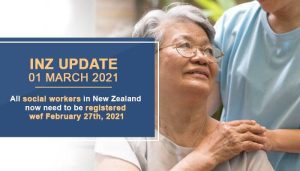
    New Zealand Shifts To Mandatory Registration Of All Social Workers From 27 February 2021

    Mandatory registration is required by law from 27 February 2021 for all social workers to undertake employment in New Zealand. Residence immigration instructions have been amended to incorporate Social worker occupation to the list of occupations requiring registration under the Skilled Migrant Category (SMC).

    Social workers provide care, advice and support to people with personal or social problems and help with community and social issues.

    All social workers now need to be registered with the Social Workers Registration Board (SWRB). To gain clarity it is good to know that you need to be registered if you:

    • call yourself a social worker,
    • are known as a social worker, or
    • are held out to be a social worker.

    Those who do not have an SWRB-recognised social work qualification but have practical social work experience in New Zealand, may still be eligible to register under the experience pathway.

    How to enter a job of a Social Worker?

    To become a social worker, you need to have a recognised qualification, such as:

    • Bachelor of Social Work
    • Bachelor of Applied Social Work
    • Bachelor of Bicultural Social Work
    • Master of Applied Social Work
    • Master of Social and Community Work (Applied)

    The Government employs most social workers.

    • District health boards employ 23% of registered social workers
    • Oranga Tamariki-Ministry for Children directly employs another 22% of registered social workers and funds social workers in community organisations.

    Other employers are not-for-profit, iwi and Māori agencies, the education sector and private practices. Four per cent are self-employed. Most social workers are in full-time work, but 20% work part-time.

    If you are interested in obtaining an SWRB-recognised qualification to become a registered social worker or discuss the possibility of applying for residence, please email Immigration Advisers New Zealand Ltd contact@nzimmigration.info or call us today on +64 09 3790219.