
Provide All Relevant Information - Submit Query

Student Visa

Profile Check Form

Click Here ×
S
t
u
d
e
n
t

V
i
s
a

Get in Touch

    Minimum Wage and Median Wage in New Zealand

    In order to get some New Zealand visas, you must meet the wage rate requirement aka the wage threshold. 

    Immigration New Zealand (INZ) uses a comprehensive visa system that factors in multiple criteria, including wage thresholds, to determine eligibility for certain visas. The wage threshold is essentially a benchmark income level that must be met by visa applicants unless their roles come under an exemption category.

    These wage thresholds serve as an integral tool in evaluating the job requirements and assessing the skill level required for a particular occupation. They are frequently adjusted to keep pace with evolving economic conditions and rising inflation, ensuring that they remain effective and relevant.

    What is the minimum wage

    The minimum wage in New Zealand is the lowest hourly rate that an employer is legally required to pay an employee. It is set by the government and is reviewed every year. As of 1 April 2023, minimum wage nz 2023 is $22.70 per hour.

    When does the minimum Wage increase / next minimum wage increase nz

    New Zealand’s minimum wage increases every year in April. It is expected to be in line with inflation.

    What is the median wage / immigration nz median wage

    The median wage is the minimum pay threshold for most jobs under the Accredited Employer Work Visa (AEWV). As of 27 February 2023, the median wage is NZD 29.66 per hour.

    To know about the impact of the median wage on migrant workers and employers, click here

    When does the Median Wage Increase

    The median wage is announced every year in February.

    Accredited Employer Work Visa (AEWV) and the Median Wage

    AEWV jobs must pay the worker at least the median wage unless there is an exemption or the job is part of a sector agreement.

    Within certain sectors, there exists an agreement commonly referred to as a ‘sector agreement’ which permits companies to offer remuneration packages below the median wage for new employees who are being hired under an Alternate Employment Work Visa (AEWV). Nevertheless, this agreement is accompanied by a critical caveat; these companies are obligated to comply with a minimum wage threshold that is directly linked to the prevailing national median wage rate. 

    Some roles in sectors like tourism & hospitality, care workforce, meat processing, transport etc. are exempt from being paid the median wage.

    Skilled Migrant Category (SMC) Resident Visa and the Median Wage

    Under the new 6-points system effective 9 October 2023, points can be claimed for income as well.

    If you are paid 1.5 times the median wage, you can claim 3 points. If you are paid double the median wage, then you can claim 4 points. And if you are paid 3 times the median wage, you can claim 5 points.

    Parent Resident Visa and the Median Wage

    Anyone wanting to sponsor parents for a Parent Resident Visa must earn over the median wage. The sponsor must earn 1.5 times the median wage for 1 parent and an increase by half the median wage for each additional parent. 

    The visa wage thresholds are intrinsically linked to the median wage. In other words, any hike in median wage would result in an equivalent increase in the wage threshold for the visa. This mechanism ensures that visa holders have sufficient financial resources to support themselves and their dependents while residing in New Zealand. This practice also aligns with the country’s efforts to maintain a fair and equitable immigration system, where all visa applicants must meet certain economic standards before being granted entry. Therefore, the interdependence between visa wage thresholds and the median wage serves as a crucial component of the country’s immigration policy.

    The minimum wage and median wage in New Zealand are an important issue that affects many people. The government is committed to ensuring that the minimum wage is fair and that it keeps pace with inflation. In the coming years, the minimum wage is expected to continue to increase. This will help to ensure that everyone who is working full-time can afford to meet their basic needs.

    Get in touch with Immigration Advisors New Zealand Ltd, which provides up-to-date immigration information so you can consider opportunities and prepare yourself for the future. To know all the required procedures, contact us at contact@nzimmigration.info or call on +64 09 3790219.

    FAQs:

    [sp_easyaccordion id=”39962″]

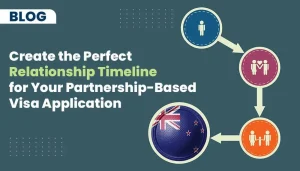
    Create the Perfect Relationship Timeline for Your Partnership-Based Visa Application

    When applying for a partnership-based visa for New Zealand, it is crucial to include a comprehensive relationship timeline as part of your application. This timeline serves as an essential document that outlines the significant milestones and stages of your relationship with your partner.

    The purpose of the relationship timeline is to provide immigration authorities with a clear understanding of the development and authenticity of your relationship. It helps establish that your partnership is genuine and not solely for visa purposes.

    What is a Relationship Timeline

    At the heart of the Partnership-Based Visa application lies your relationship history or timeline. It’s not just a simple list of dates and events – it’s a story. A story about you and your loved one, and how your relationship blossomed into something beautiful. This timeline allows the Immigration Officer to take a deep dive into the inception, progression, and maintenance of your relationship. It’s your chance to show off how much you and your partner have grown and evolved together. Not to mention, it’s a crucial factor in demonstrating the genuineness of your relationship. So don’t be afraid to let your personality shine through when explaining your love story – after all, it’s what makes your relationship special. Let your words show that you and your partner are the perfect fit for each other, and that your love is the real deal.

    What to Include in Your Relationship Timeline

    When creating a relationship timeline, it’s important to include key moments and milestones that have shaped your journey together. Here are some suggestions of what to include:

    • Your first meeting: Include details about when, where, and how you first met. This could be a chance encounter, a blind date, or even an online connection.
    • Relationship start: Note the date when your relationship officially began or when you first started dating. This marks the beginning of your romantic journey together.
    • Moving in together: If you decided to live together, include the date when you took this significant step. It represents a deeper commitment and shared living arrangements.
    • Engagement: Capture the moment when you or your partner proposed or when you both agreed to get engaged. Include details about the proposal, such as the location, the ring, or any other meaningful aspects.
    • Wedding day: Record the date of your wedding ceremony. This could include the venue, theme, vows, and any other memorable elements that made your wedding day special.
    • Milestones: Consider including other significant milestones, such as anniversaries, vacations, career achievements, or personal accomplishments that have had an impact on your relationship.
    • Starting a family: If you have children together, include their birthdates and any other important details related to becoming parents. This signifies a new chapter in your relationship.

    Remember, your relationship timeline is unique to you and your partner. Feel free to customize it with additional events and memories that hold meaning for both of you.

    You must also mention the dates of significant events in your relationship – when you started spending more time together, moved in together, shared financial resources, made joint decisions, introduced each other to your families and friends, or started planning a future together. 

    If there are any periods of separation, they too must be included in the relationship timeline. Also explain how you kept in touch & how frequently. (Eg. From xxx till xxx we were separated by border restrictions & travel bans during the pandemic. We kept in touch daily through messaging and calls)

    Holidays/ trips taken together, celebrations/events attended together, festivals celebrated together can also be included in the relationship timeline.

    How to Write Your Relationship Timeline

    As part of your Partnership Based Visa application, your relationship timeline serves as a key piece of evidence to demonstrate the authenticity of your partnership. It’s important to provide as much detail as possible and include concrete supporting evidence, such as photographs, to back up your claims. Remember that any conflicting information may raise doubts about the genuineness of your relationship, so make sure that the information provided in your timeline matches the documentation you supply with your application. 

    By putting in the effort to craft a well-researched and comprehensive timeline, you can increase your chances of having your visa application approved and begin your new life together in beautiful New Zealand.

    Get in touch with Immigration Advisors New Zealand Ltd, which provides up-to-date immigration information so you can consider opportunities and prepare yourself for the future. To know all the required procedures, contact us at contact@nzimmigration.info or call on +64 09 3790219.


    NZ Welcomes 14,000 Overseas Workers and 12,438 Students in July

    Work visa arrivals in New Zealand declined for the second consecutive month, signalling a potential slowdown in the influx of overseas workers since pandemic restrictions were eased. In July, the number of people arriving on work visas dropped to 14,238, down from 16,878 in June and 17,319 in May, according to the Ministry of Business Innovation and Employment (MBIE).

    However, despite the decline, the numbers are still close to pre-pandemic levels, with 102,624 arrivals from February to July this year compared to 111,120 in the same period in 2019. The trend is also reflected in the graph below, indicating that peak numbers may not be reached until January next year. At the end of July, there were 149,220 people in New Zealand on work visas, a significant decrease from the peak of 222,036 in March 2020. The decline was largely due to a transfer of 204,504 people from work visas to residence visas under the limited-time 2021 Residence Visa Scheme.

    On the other hand, student visa arrivals have shown a sharp increase, with 12,438 arrivals in July. Although they follow the pre-pandemic seasonal pattern, the total numbers are still lower than in previous years. At the end of July, there were 52,248 people in New Zealand on student visas, compared to 86,100 in July 2019. The international education sector still has a long way to go to recover to pre-pandemic levels. We value your comments and encourage respectful and insightful debate. Please register to comment if you haven’t already.

    Ref – Click here