Provide All Relevant Information - Submit Query

Student Visa

Profile Check Form

Click Here ×
S
t
u
d
e
n
t

V
i
s
a

Get in Touch

    The New Median Wage & Its Impact on Employers and Migrants

    The New Zealand government recently announced that their median wage will increase from NZD $27.76 to NZD $29.66 an hour, which will come into effect on 27 February 2023. This new wage is set to have a significant impact on employers and migrants alike, so it’s important to understand exactly how the new wage will affect you. Let’s break down what this could mean for employers and migrants in New Zealand.

    Impact on Employers

    For employers in New Zealand, the new median wage may result in higher wages for workers who are currently earning less than the proposed amount. Employers must also take into account any changes to the Accredited Employer Visa (AEWV) and sectors covered by sector agreements when determining wages for employees. It is important to note that if the wage threshold increases between the job check being approved and the migrant applying for their visa, then they may need to meet a higher wage threshold than was originally approved in the job check pay range. This means employers should be aware of any changes in order to remain compliant with immigration laws when hiring migrant workers.

    Impact on Migrants

    For migrants looking to move to New Zealand, this increase in median wage can be beneficial as it gives them more potential opportunities with employers who are offering jobs at or above this level of income. This could result in more competitive wages for those seeking work as well as greater job security due to these higher wages. However, it is important for migrants to keep an eye out for any changes that might occur between the time their job check is approved and when they apply for their visa as they may need to meet a higher wage threshold than was initially approved.

    Median Wage will Depend on the Date of Lodgement of the Visa Application

    When hiring a migrant worker, employers must ensure they are paid in accordance with the median wage that is applicable at the time of application. As an example, if an employer is granted a job check on 1 November 2022, any applicant for an Accredited Employer work visa submitted before 27 February 2023 must be paid a minimum of $27.76 – this being the median wage in immigration system at time of application. However, if the same visa application is made on or after 27 February 2023, employers are legally required to increase their offer to $29.66 – the new median wage in immigration system at that point. In either case, careful consideration and planning must be taken to guarantee migrant workers receive fair wages for their work and do not fall victim to exploitation.

    The New Zealand government has introduced changes to their residence visa categories and pathways. This includes introducing median wage-related criteria for the Green List, Highly Paid, Skilled Migrant and Parent Categories. The median wage used for these categories will be based on the June rate published by Stats NZ the previous year, determined in February of each year. This standardized approach will provide added clarity to those applying for residence visas as well as increased notice of any updates. Stats NZ will launch a median wage calculator tool ahead of time to further support any person applying for a New Zealand residence visa. These changes simplify the application process allowing more people to qualify for visa eligibility.

    Median Wage Exception for the Tourism & Hospitality Sectors

    The COVID-19 pandemic has been particularly hard on the tourism and hospitality industries, leading to an exception to the median wage threshold under the AEWV that allows for a lower wage threshold of $25 an hour until April 2023. This exemption demonstrates recognition from the government that these sectors have suffered unprecedented levels of hardship and disruption in recent times, and will help support those employed in tourism and hospitality roles over the coming months. A smoother transition from this lower wage threshold is planned, with the government proposing a stage-by-stage increase over time to $28.18 in April 2023 until April 2024 when wages must meet or exceed 100% of the median wage. This continued support gives these industries hope for potential recovery in challenging times.

    The introduction of a new median wage has implications both positive and negative depending on where you stand as an employer or migrant worker in New Zealand. For employers, it could mean increased costs due to having to pay higher salaries, while it could also mean improved compliance with immigration laws when hiring migrant workers. For migrants, however, this could result in better job opportunities and improved wages compared to before — but again, they must be aware of any changes that might occur before applying for their visas so they can make sure they meet all requirements necessary for approval. All-in-all, it’s important that both employers and migrants understand how these changes will affect them going forward so that everyone can benefit from these new regulations when they come into effect.


    Bring Your Partner to NZ on a Partnership Based Visa

    Are you looking to bring your partner and children to New Zealand on a partnership-based visa? The process can seem daunting, but it doesn’t have to be. To be able to apply for a visa based on your partnership, you must meet the definition of partnership and submit evidence to show your relationship is genuine. Immigration New Zealand (INZ) defines partnership as two people of the opposite or same sex who live together in a genuine and stable relationship in either a legal marriage, a civil union, or a de facto relationship.

    Please do keep in mind that from INZ’s perspective living together means sharing the same home as your supporting partner. You and your supporting partner also must be aged 18 or over, have the consent of your parents or guardians if you are aged 16 or 17, have met each other before applying for a visa based on your partnership and not be close relatives.

    With proper preparation and knowledge, you can make the transition as smooth and successful as possible. Here are some tips on how to go about getting a New Zealand partnership-based visa for your family:

    1. Check eligibility requirements – Ensure that both you as a supporting partner and your partner meet the eligibility requirements for a partnership-based visa. This can include evidence of your relationship such as marriage or civil union certificates, documents confirming financial arrangements, etc.
    2. Fill in all forms correctly – Carefully fill out all necessary application forms with accurate information so they can be processed quickly and easily by the relevant authorities.
    3. Gather required documents – Assemble all required relationship documents to prove a genuine and stable relationship. In addition, assemble certain mandatory documents too, such as birth certificates, passports, medical records, police clearances etc., before submitting the application form.
    4. Submit the application – Submit all necessary forms and supporting documents through Licensed Immigration Advisers – Immigration Advisers New Zealand Ltd.
    5. Follow-up – Keep track of the progress of your application until a decision has been made on your visa request.

    By following these steps and completing all necessary paperwork correctly, you’ll have a better chance of obtaining a New Zealand partnership-based visa for yourself and your family quickly and without complications!

    Partnership Visa – NZ: Come to this Wonderful Country with the Person You Love Most!

    Are you in a committed, genuine and stable relationship with your partner? Is your partner a New Zealand resident or citizen or holds a New Zealand temporary visa? If so, then Immigration Advisers New Zealand Ltd. may be able to help you come to New Zealand & live together.

    This wonderful country has so much to offer couples and we want to make sure that you can experience it all together. So if you’re interested in applying for a partnership visa, read on for more information.

    If you’re in a genuine and stable relationship with your partner, who can be someone of the opposite or same sex, you may be able to help you come to New Zealand together.

    Relationships are valuable and treasured. You may be able to get a Partnership Based Visa if you’re in a genuine and stable relationship with your partner. A couple can get this visa regardless of whether the individuals are of the opposite sex or the same sex. A Partnership Based Visa application enables the couple to travel together to New Zealand and live together. This gives couples substantial reassurance in their new lives as they make the transition into a new country that is welcoming and diverse.

    If you’re interested in applying for a partnership visa, contact Immigration Advisers New Zealand Ltd. today!

    To be eligible for a partnership-based visa you must provide sufficient evidence of your relationship – its inception & progression, having joint financial commitments, sharing household duties etc. A partnership-based visa will allow you and your partner to live and work in New Zealand.

    Immigration Advisers New Zealand Ltd. provides expert immigration-related guidance for those who are looking to begin the process of applying for a partnership-based visa. Our experienced Licensed Immigration Advisers (LIAs) will provide professional guidance, support and advice regarding the visas you may be eligible for and the right way to go about applying for a visa.

    Don’t delay – if you’re in a genuine & stable relationship with your partner, Immigration Advisers New Zealand Ltd. could be the key to helping you live together in New Zealand!

    Variations of Conditions on New Zealand Work Visa

    Are you on a work visa in New Zealand but your job details are changing and are wondering what you need to do?

    Variations of Conditions on New Zealand Work Visa can help keep you legally working here. Whether it’s a change in employer details or you need to apply for a new visa altogether, we’re here to guide and provide support every step of the way.

    We understand the complex regulations around applying for visas so that any changes are done smoothly and swiftly with minimal hassles.

    If you look at your eVisa letter or work visa label, there may be conditions placed on it. On most work visas, these conditions will state your job title, your employer’s details and your region of employment (e.g. Wellington or Auckland). If any of these details change, your visa conditions must be changed as well for you to continue to work lawfully in New Zealand. Depending on what has changed about your job, you may need to request a variation of conditions on your existing visa or you may need to apply for a new work visa.

    A variation of conditions will only be granted if the new conditions still meet the intent of the instructions your original visa was granted under. In any other situation, you may need to apply for a new visa.

    With our expert service, not only do we strive towards understanding your specific needs but also make sure they are processed professionally according to the immigration laws of New Zealand. Whatever change may come up with regard to job title, employer details or region of employment will be taken into consideration while processing the variation application. This means that all changes can be made comfortably without having any further issues related to legality at work – giving you peace of mind so you can focus on what matters most!

    Submit an enquiry now by visiting our website if you have any queries regarding variations in conditions on an existing work visa – it’ll just take a few minutes and one click away from bringing closer your goal!

    Working in New Zealand as an International Student

    Are you an international student looking to gain work experience and supplement your funds while studying in New Zealand? If so, you’re in luck! Under certain circumstances, student visa holders may be eligible for part-time and/or full-time work (during scheduled vacations), or to meet course requirements for practical work experience. In this guide, we will look at how you can apply for a variation of conditions to request the work rights be added to your visa. We will also discuss how it is possible for students to work in New Zealand after they have completed their studies.

    Work Rights During Studies

    If you are an international student who has been granted a student visa, it is important that you check your visa conditions and determine if it allows you to work. If your current student visa does not allow you to work, but your circumstances make you eligible for these work rights, you may apply for a variation of conditions (VoC) to request the necessary changes be added to the visa label. To do this, contact us at contact@nzimmigration.info and we can walk through the process with you.

    Working After Completion of Studies

    It may also be possible for international students to continue working in New Zealand after they have completed their studies. Certain courses may mean that students are eligible for a post-study work visa up to three years after completion of their studies. The length of time and type of course studied makes you eligible or ineligible for post study work visa rights. If you are unsure about it, please get in touch with us so that we can assess your eligibility.

    Conclusion:

    Gaining valuable employment experience while studying abroad is a great way to expand your skillset, supplement your income, and help build towards future career goals. So if you are an international student studying in New Zealand who is interested in exploring these opportunities, then make sure to contact us at contact@nzimmigration.info so that we can check whether or not you meet the eligibility criteria for post-study work visa! We would love to assist with any questions or queries that may arise when starting out on this journey! Good luck!

    An Overview of the Skilled Migrant Category Resident Visa

    Are you considering a move to New Zealand, but aren’t sure if you’re eligible? The Skilled Migrant Category Resident Visa is designed for those who are 55 or younger, with skills that will contribute to New Zealand’s economic growth. If you meet this criteria and have a job offer in your field, then the Skilled Migrant Category Resident Visa could be the solution for you. Let’s take a closer look at what this visa entails and how to apply.

    Eligibility Requirements

    In order to be eligible for the Skilled Migrant Category Resident Visa, you must meet certain requirements. This includes being 55 years of age or younger, being employed in an occupation from an approved list, and having a job offer in your field. You can also include close family members in your application.

    Application Process

    The application process has two stages. First, you submit an expression of interest (EOI), including a tally of points based on your age, work experience, qualifications and job offer. As of 18 January 2023, EOIs must have at least 180 points to be selected; thereafter selections will be made on a monthly basis. If your application is chosen during selection process, then you can make a full residence application online through Immigration New Zealand (INZ). Additionally, INZ may require additional information such as medical certificates and police certificates depending on the circumstances of each case.

    Future Changes

    At present the long-term direction of the Skilled Migrant Category is being reviewed by INZ which means that there may be changes to eligibility requirements in the future. It is important to stay informed about any changes so that potential applicants know what they need ahead of time when applying for this visa type. Every effort should be made by potential applicants to ensure all documentation is up-to-date and accurate prior to submitting their EOI as this can help expedite their application process. INZ offers additional resources available on its website about staying informed about changes within immigration categories as well as providing assistance throughout the application process if needed.

    Conclusion:

    The Skilled Migrant Category Resident Visa provides migrants with an opportunity to live and work permanently in New Zealand while contributing their skillset towards the country’s economic growth and development. The application process consists of two stages – submitting an expression of interest online followed by making a full residence application through INZ if selected during selection process – with both steps requiring certain eligibility requirements such as age restrictions and job offers in specified fields in order for applications to be accepted by INZ officials. As more changes are expected within this category it is important for potential applicants to stay informed prior to submitting their applications so that they are aware of all necessary documents required for their respective cases before progressing further within the residency visa process. With thorough research and proper preparation potential migrants can take advantage of this opportunity that allows them not only live permanently in New Zealand but also contribute towards its future prosperity as well!

    A SMC update on EOI draw conducted on 18 January 2023 can be seen by clicking this link.

    The Benefits of Studying For Your PhD in New Zealand

    While many countries offer world-class doctoral research opportunities, New Zealand offers some perks and benefits that put it ahead of the competition. So if you are an international student looking for a challenging and rewarding opportunity, studying for your PhD in New Zealand is the perfect option. From its high-quality education to its stunning landscapes, there’s no doubt why so many students pursue their studies in this beautiful country.

    High-Quality Education

    Every one of the country’s eight universities is ranked in the top 3% in the QS World University Rankings, which means international students will enjoy a world-class education. In addition to becoming an expert in your area of interest, you will also develop valuable transferable skills such as critical thinking and problem-solving. Equipped with these skills, you’ll be well-prepared to take on any challenge that comes your way.

    Safe Environment

    New Zealand is known for being one of the safest countries in the world – something that may be especially important if you are considering moving overseas for your studies. With low crime rates and friendly locals, you can feel secure knowing that you are living and studying in a safe environment. This sense of security is invaluable if you want to focus on achieving your goals without worrying about potential risks or dangers.

    Beautiful Landscapes

    Lastly, let’s not forget about New Zealand’s breathtakingly beautiful landscapes. From lush forests to snow-capped mountains, this small island nation has something unique to offer nature lovers and outdoor enthusiasts! You can take advantage of all this natural beauty during your free time by exploring the country with friends or simply taking a short stroll outdoors – either way, it’s sure to be an unforgettable experience!

    Conclusion:

    International students seeking a challenging yet rewarding opportunity should consider studying for their PhD in New Zealand. Not only will they benefit from high-quality education at one of the country’s eight world-class universities, but they will also have access to a safe environment and stunning landscapes during their time there! With so much to offer, it’s no wonder why so many people choose New Zealand as their study destination of choice!

    The Benefits of a Postgraduate Degree in New Zealand

    New Zealand is renowned worldwide for its stunning landscapes and unique wildlife, but did you know it’s also a great place to pursue a postgraduate degree? With internationally-renowned universities and an array of courses, international students can study for a Masters’s degree in New Zealand. Here we’ll discuss the benefits of pursuing a postgraduate degree in New Zealand and the visa requirements for international students.

    The Benefits of a Postgraduate Degree

    New Zealand universities provide excellent opportunities to study at both undergraduate and postgraduate levels. Postgraduate degrees allow you to gain specialist qualifications within your field, which can help you stand out from the crowd when applying for jobs or further studies. In addition, postgraduate degrees are often more flexible than undergraduate ones – allowing you to tailor your learning towards your interests and career aspirations. This flexibility also means that you may be able to complete your degree faster than if you were studying an undergraduate programme.

    Did you know that international students who have completed post-graduate study in New Zealand are eligible for a Post-Study Work Visa? This visa allows Masters students to stay in the country and work for up to 3 years, and Post Graduate Diploma students to work for one year. It is an excellent way for students to gain valuable work experience and make connections after completing their studies. It also presents an opportunity for international students to explore the beautiful country of New Zealand while enjoying the benefits of its modernised education system.

    Visa Requirements for International Students

    If you’re an international student looking to study in New Zealand, you must meet certain visa requirements before starting your course. All international students must apply for a student visa before beginning their studies; these visas are granted by Immigration New Zealand (INZ). To apply for a student visa, you’ll need to provide proof of acceptance into your chosen university or college and evidence that you have sufficient funds for fees, living costs and travel expenses during your stay. You may also need to sit an English language test.

    The Quality of Education

    The quality of education offered by universities in New Zealand is exceptionally high; several internationally-acclaimed institutions are offering postgraduate programmes across the country. These include the University of Auckland, Auckland University of Auckland, Massey University, Lincoln University, University of Otago and Victoria University of Wellington and Massey University, which we represent and have achieved high rankings in global league tables over recent years. Furthermore, each university offers a wide range of courses designed to meet the needs of today’s job market. So no matter what field you’re interested in pursuing, something should be available that suits your individual needs and career aspirations.

    Conclusion:

    In short, studying towards a postgraduate degree in New Zealand has many advantages, from gaining specialist knowledge within your field to having access to some of the world’s leading universities and quality educational resources – not forgetting being able to explore one of the most beautiful countries on earth while doing it!

    However, it’s important to remember that if you’re an international student looking to pursue postgrad studies abroad, certain criteria must be met first, such as obtaining a valid student visa from Immigration New Zealand (INZ). Nonetheless, with careful planning and preparation, international students from all backgrounds and countries worldwide can achieve their academic ambitions by studying towards a postgraduate degree in this amazing country!

    Why Immigration is Critical to New Zealand’s Success

    New Zealand has long been considered a desirable place for migrants, both for its strong economy and beautiful landscape. As a country, it has benefitted from the influx of foreign workers and their varied skill sets. Immigration also provides the much-needed injection of cultural diversity that makes New Zealand such an attractive destination for so many people. This article discusses why immigration is critical to New Zealand’s success as an economy and society.

    The Contribution of Skilled Workers

    Immigration brings in skilled workers whose expertise is often highly sought-after in the job market. These workers have contributed significantly to the development of New Zealand’s economy by filling skills gaps and providing valuable insights into new markets. As well as bringing in people with valuable knowledge, migration also helps diversify the workforce, which can help drive innovation and creativity in businesses across all sectors.

    Cultural Exchange

    Immigration also provides essential cultural diversity that helps make NZ such an attractive place to live and work. The influx of different cultures enriches society at large, creating a melting pot of ideas, customs, beliefs and languages that can create new opportunities for growth and understanding within communities. It strengthens overall cultural identity and drives economic growth through increased tourism opportunities, as people flock from all over the world to experience these unique cultures firsthand.

    The Impact on Education

    Immigration also positively affects education in New Zealand, with migrants bringing different perspectives to their studies that can help shape future generations of learners. Furthermore, immigrants often bring a wealth of knowledge about different countries, which is invaluable for students looking to further their studies abroad or gain valuable international experience after graduation.

    Conclusion:

    Overall, it’s clear why immigration is so essential to New Zealand’s success as an economy and society – without it; we would not have seen the same levels of growth in recent years. While it is important to ensure that only those with legitimate skills are coming into the country legally, it’s equally important to recognize how beneficial migration is when managed properly – both economically and culturally! Migrants play an essential role in making our country what it is today – let us celebrate this fact!

    New Zealand is an Ideal Destination for International Students

    New Zealand has placed itself firmly on the map as an attractive destination for international students seeking quality education and increased mobility. The country’s modernisation initiatives have increased student enrolment, provided access to more scholarships, enabled more student mobility and opened up a variety of online courses. Let’s explore some of the main reasons why New Zealand is becoming such a popular place to study.

    Scholarships & Student Mobility

    New Zealand offers generous scholarships to international students who meet certain criteria. This makes studying in the country much more affordable for those who may not be able to afford it otherwise. Additionally, the visa policy in New Zealand has enabled more international students to travel and study in the country while taking advantage of its educational opportunities. As a result, there has been an increase in student enrolment from abroad, providing even more access to these scholarships and visa policies. 

    Online Courses & Innovations

    The modernisation efforts by New Zealand have also seen an increase in the availability of online courses and other technological innovations that make studying more efficient. For example, universities have implemented virtual classrooms that enable students from around the world to attend lectures remotely. Additionally, many universities are offering blended learning programs which combine traditional classes with digital ones to create a better learning experience for all involved. These features make it easier than ever before for international students to gain access to quality education without having to leave their home countries or sacrifice their schedules due to time commitments. 

    Student Support Services

    Finally, it’s important to mention that New Zealand provides excellent support services for its international students. Universities across the country offer comprehensive orientation programs designed specifically for foreign students so they can feel comfortable settling into their new environments and have access to resources such as language classes and cultural clubs that can help them adjust easily and quickly. In addition, most universities provide career guidance services and job placement programs so foreign students can take advantage of networking opportunities right away upon graduation.

    Conclusion:

    In conclusion, New Zealand has become a popular destination among international students due to its modernisation initiatives that provide greater access to education through larger scholarship funds, increased student mobility policies, innovative online courses and technological advancements as well as comprehensive student support services that ensure foreign students feel welcome and supported throughout their studies in the country. With these initiatives in place, there’s no doubt that New Zealand will continue being an attractive destination for those seeking quality education and increased mobility abroad.

    Information for Students Travelling to New Zealand

    New Zealand is a popular destination for students who want to travel and experience a new culture. There are many options for student travel in New Zealand, including study abroad programs, internships, and volunteer opportunities.

    Click here to know about the best reasons for studying in New Zealand.

    If you are a student planning to travel to New Zealand, there are a few things you should consider:

    Visa: If you are planning to study in New Zealand for more than three months, you will need to apply for a Student Visa NZ. You will need to provide evidence of your enrolment in a course of study and meet other requirements in order to be granted a student visa. It is advisable to apply for a visa well in advance as visa processing takes time. Immigration New Zealand (INZ) recommends two to three months in advance to beat the last minute rush.

    Accommodation: There are many options for student accommodation in New Zealand. Depending on your budget your options include halls of residence (ie hostels), homestays, student dormitories and flatting. It is a good idea to research your options and book accommodation in advance.

    Budget: New Zealand is generally a relatively expensive country if not researched well, so it is important to plan your budget carefully after lot of research. Make sure you have enough money to cover your living expenses, including accommodation, food, and transport. The cost of living is approximately NZD 20,000 per annum.

    Click here to read about the evidence of funds required by international students to study in New Zealand

    Insurance: It is a good idea to take out travel insurance before you leave your home country, to protect yourself in case of any unforeseen events such as illness or accidents.

    It is best to do some research in advance and be prepared.

    One of the benefits of studying in New Zealand is that you may be able to get a Post Study Work Visa on course completion. To know more about this, click here.

    Get in touch with Immigration Advisors New Zealand Ltd, which provides up-to-date immigration information so you can consider opportunities and prepare yourself for the future. To know all the required procedures, contact us at contact@nzimmigration.info or call on +64 09 3790219.

    Visa for Partners & Dependent Children of NZ Work Visa Holders

    If you are the partner of a New Zealand work visa holder, you may be able to apply for a visa that allows you to live and work in New Zealand as well. The process for obtaining a visa as a partner or a dependent child of a work visa holder will depend on the type of work visa that your partner holds and the length of their visa.

    Partners of NZ work visa holders have the following options:

    • Partnership-based open work visa
    • Partnership-based visitor visa

    Dependent children of NZ work visa holders have the following options:

    • Dependent child student visa
    • Dependent child visitor visa

    NZ Work Visa holders who cannot support their family

    The following work visa holders cannot support partners & dependent children:

    • Fishing Crew Work Visa holders
    • Working Holiday Visa holders
    • Limited visa holders under the Recognised Seasonal Employer (RSE) or Supplementary Seasonal Employer (SSE) schemes
    • Silver Fern Job Search Visa holders
    • Domestic Staff of a Diplomat work visa holder

    Partners & Dependent Children of Essential Skills Work Visa Holders

    Essential Skills Work Visa holders earning below the median wage can only support partners on a visitor visa. Those earning at or above the median wage or meeting a certain income threshold can support work or visitor visas for their partners and visitor or student visas for dependent children.

    Partners & Dependent Children of Accredited Employer Work Visa (AEWV) Holders

    AEWV holders earning the median wage or above can support work visas for partners. However, if earning below the median wage, then they can only support a visitor visa for the partner.

    AEWV holders can support visitor or student visas for dependent children only if they meet the income requirement. As on 10 January 2023, this is $43,322.76 a year.

    Currently, partners of work visa holders have open work rights. Immigration New Zealand (INZ) has announced that this will change from April 2023 onwards. Please click here for more information regarding this.

    Evidence Required

    To apply for a visa as the partner of a work visa holder, you will need to provide evidence of your relationship with your work visa holder partner. Such evidence includes but is not limited to a marriage certificate, proof of cohabitation etc. You may also need to provide evidence of your financial and personal circumstances.

    Duration of Visa for Partners and Dependent Children

    If you are granted a visa as the partner of a work visa holder, you will generally be able to work and live in New Zealand for the same length of time as your partner. Dependent children, too, can live and study in New Zealand for the same duration.

    However, you will only be eligible for permanent residence once your partner has lived & worked in New Zealand for at least two years.

    If you need assistance with a partnership-based visa, please provide your details by clicking here, and we will help!

    It is important to note that the process for obtaining a partnership based visa as a partner of a work visa holder can be complex. Hence, it is recommended that you seek the advice of a qualified immigration consultant like Immigration Advisers New Zealand Ltd. to ensure that you have the best chance of obtaining a visa.

    Get in touch with Immigration Advisors New Zealand Ltd, which provides up-to-date immigration information so you can consider opportunities and prepare yourself for the future. To know all the required procedures, contact us at contact@nzimmigration.info or call on +64 09 3790219.

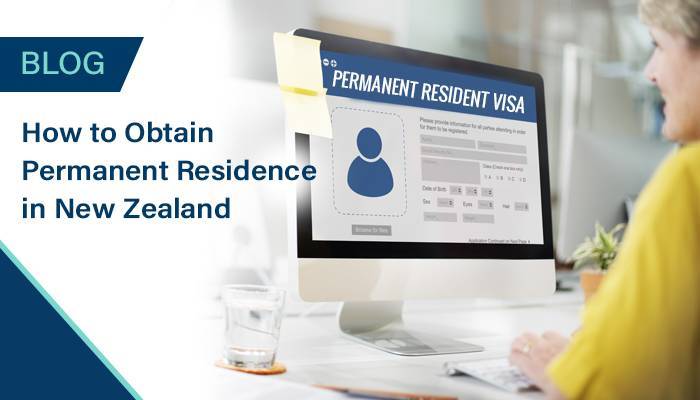
    How to obtain Permanent Residence in New Zealand

    Obtaining a New Zealand permanent resident visa is a multi-step process that involves the interpretation of Immigration New Zealand’s (INZ) residence policies and determining one’s eligibility under these policies. Here is a simplified and broad overview of the process involved:

    Have an Acceptable Standard of Health and Character:

    To be eligible for a New Zealand permanent resident visa, the two primary requirements are to be of good character and have an acceptable standard of health.

    If you do not have any court cases, have never been removed or deported from another country and are not prohibited from entering another country, you are likely to be considered as being of good character as per INZ. To be considered healthy, you should not be suffering from any health condition that is likely to require significant care and/or hospitalization in New Zealand. However, the assessment of health and character may not always be straightforward. Therefore, if there is any ambiguity in your mind, the best solution would be to approach a Licensed Immigration Adviser and have an honest and open discussion with your adviser.

    Choose a Residence Category:

    Once you have ticked off health and character, the next step would be to identify the most suitable Residence Pathway. The New Zealand government has several different categories of residency in New Zealand.

    These are –

    Each category has its eligibility requirements, so choosing the category that best fits your circumstances is important. It is strongly recommended that you consult a licensed immigration adviser to guide you appropriately in determining the most suitable pathway for obtaining residence in New Zealand.

    Processing Time Frames:

    Before getting a Permanent Resident Visa, you must obtain residence in New Zealand. Processing times for residence and permanent residency applications vary, but it is generally a good idea to allow several months for a decision to be made. You will be notified by Immigration New Zealand if your application is successful or if additional information is required.

    I hope this information is helpful! If you have more questions about applying for a permanent resident visa in NZ, do not hesitate to seek advice from a licensed immigration adviser.

    Get in touch with Immigration Advisors New Zealand Ltd, which provides up-to-date immigration information so you can consider opportunities and prepare yourself for the future. To know all the required procedures, contact us at contact@nzimmigration.info or call +64 09 3790219.

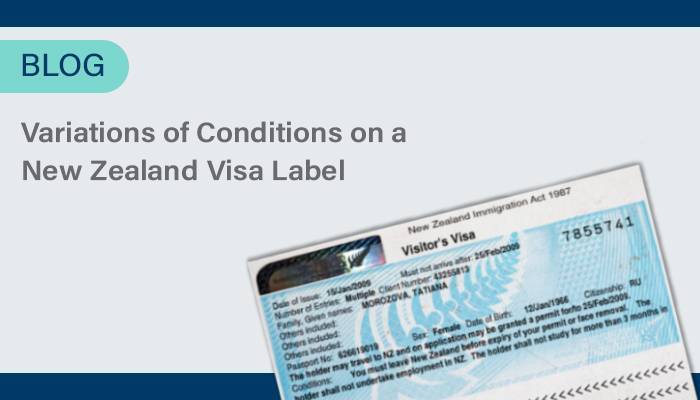
    Variation of Conditions on A New Zealand Visa Label

    Visa conditions, i.e. stipulations, are mentioned on the visa label when a visa is issued. These visa conditions have to be adhered to in letter and spirit. However, in some instances, Immigration New Zealand (INZ) allows a variation of these conditions after issuing a visa.

    This blog provides more information about the Variation of Conditions.

    What is the meaning of Variation of Conditions?

    If you have been issued a work, student or visitor visa and the visa conditions no longer suit you, you can apply for a Variation of Conditions.

    Temporary visas such as work, student or visitor visas have certain conditions listed on the visa that instruct the visa holder what they are allowed to do while holding the visa.

    Examples of conditions -studying a particular course, studying in a specific institute, working for a particular employer, working part-time only while studying etc.

    If there is a change in your circumstances, you can apply for a change in the visa conditions. However, you cannot apply for a Variation of Conditions in all situations. Sometimes, you may have to apply for a new visa altogether.

    Changing the conditions of a Visitor Visa

    Visitor Visas have conditions are rules related to studying, working and travelling in & out of New Zealand. Even if the conditions are changed, the visa will still expire on the same day. You can apply for a variation of conditions if you want to study part-time or want to do certain seasonal work.

    Changing the conditions of a Student Visa

    You can change the conditions of your student visa if you want to change your education provider or the location where you are studying. In some cases, you have to change your visa in order to work. Depending on certain factors, INZ may approve your change your course, education provider or location of study.

    However, if you hold a Pathway Student Visa and want to change your education provider, then you will have to apply for a brand-new Student Visa.

    Changing the conditions of a Work Visa

    Some Work Visas come with open conditions that allow you to work in any profession for any employer anywhere in New Zealand. Conversely, some Work Visas come with conditions that restrict you to working for a particular employer, in a particular role and in a particular location.

    • If you hold an Accredited Employer Work Visa (AEWV) or an Essential Skills Work Visa, you can change your employer, job, location or a combination of these.
    • If you hold a Post Study Work Visa – Employer Assisted or applied for one before 26 November 2018, you can choose to have the job, location and employer removed. This will then allow you to work for any employer.
    • If you hold a Talent Accredited Employer Work Visa, you can apply to change your job or employer.

    Do you want to change your visa conditions?

    Get in touch with Immigration Advisors New Zealand Ltd, which provides up-to-date immigration information so you can consider opportunities and prepare yourself for the future. To know all the required procedures, contact us at contact@nzimmigration.info or call on +64 09 3790219.

    Source: Link 1   Link 2    Link 3   Link 4

    New Zealand Visa: Important Immigration Requirements

    There are several requirements that must be met in order to immigrate to New Zealand. These requirements can vary depending on the specific visa category you are applying for, but there are some common requirements.

    Good character: All visa applicants must be of good character and have no criminal convictions. If you have a criminal history or could be a risk to NZ, your application can be declined by Immigration New Zealand (INZ). In some cases, you may have to apply for a Character Waiver.

    • For more information about good character and character waiver, please click here.
    • For information related to character issues, please click here.

    Health: All visa applicants must have an acceptable standard of health. Some visa categories require applicants to undergo a medical examination to ensure that they do not have any health conditions that could pose a risk to the New Zealand public or impose significant costs on New Zealand’s health services. Medical reviews in the visa process can cause substantial processing delays. Immigration Advisers New Zealand has successfully obtained medical waivers from “standard” health-related issues to exceptionally complicated health issues where significant funding will be required. If issues are encountered with the processing of an application and/or a medical waiver is required, don’t hesitate to get in touch with us without delay.

    English language proficiency: Some visa categories require applicants to demonstrate a certain level of English language proficiency. This may involve taking an English language test (e.g. IELTS, OET etc.) or providing evidence of previous English language study.

    • To know about the English language requirement to study, work & live in New Zealand, please click here.
    • To learn about the English language tests accepted by Immigration New Zealand (INZ), please click here

    Age: Some visa categories have age limits or may have different requirements for applicants depending on their age.

    Financial requirements: Some visa categories have financial requirements that applicants must meet in order to be eligible. This means you must have enough money to live on while in New Zealand or have an acceptable sponsor. For further details please click on this link here.

    Employment: Some visa categories require applicants to have a job offer from a New Zealand employer or to demonstrate that they have the skills and experience to find employment in New Zealand.

    If you do not meet any of the requirements of the specific visa category you have applied for, INZ may decline your application.

    Get in touch with Immigration Advisors New Zealand Ltd, which provides up-to-date immigration information so you can consider opportunities and prepare yourself for the future. To know all the required procedures, contact us at contact@nzimmigration.info  or call on +64 09 3790219.